
St. George · Washington County
Building a custom home in St. George.
The county seat, and the reason most people end up in Southern Utah at all. Here is what living here is like, and what building here involves.
Why people come here
A small city with a national park for a back yard.
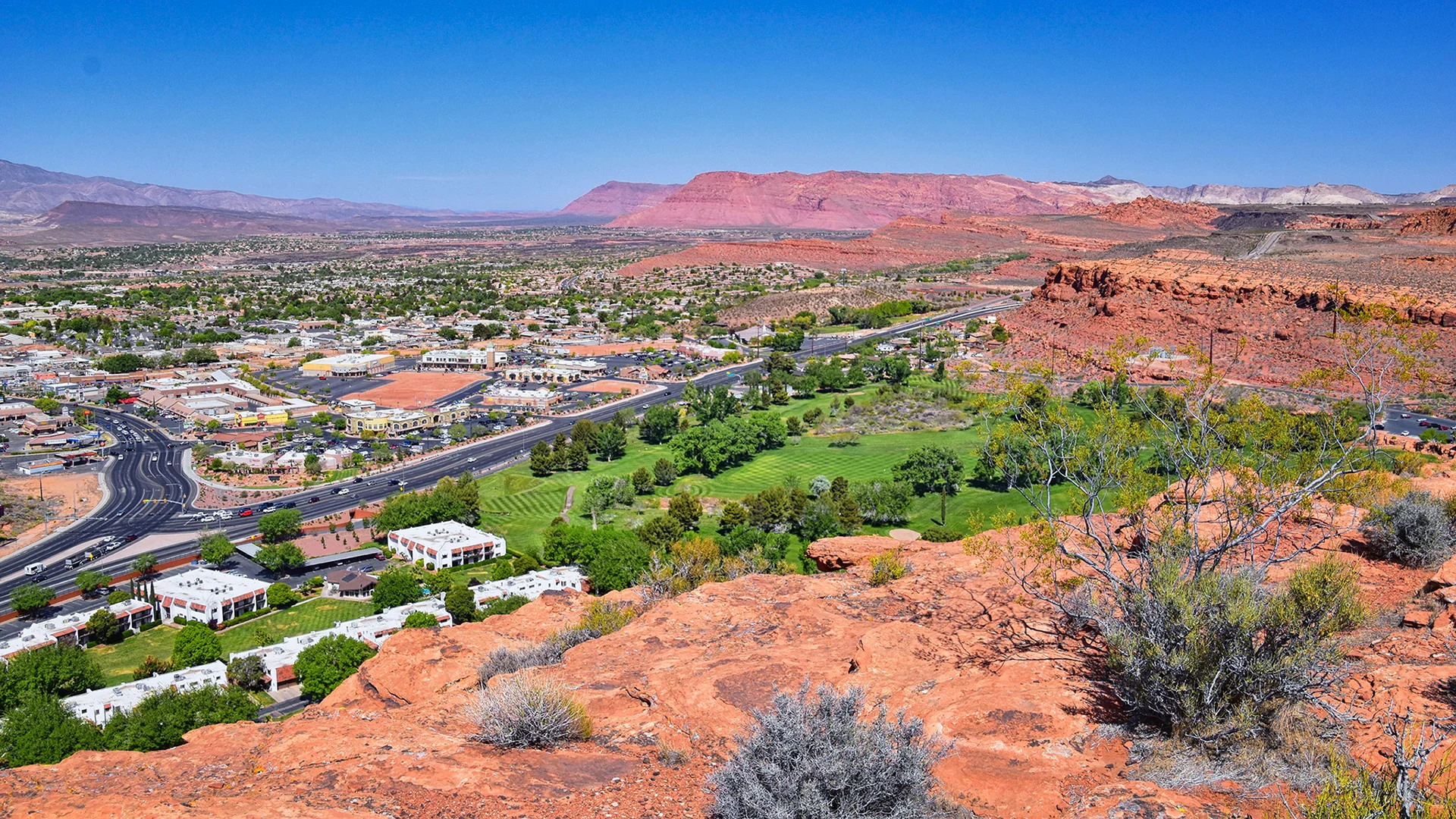
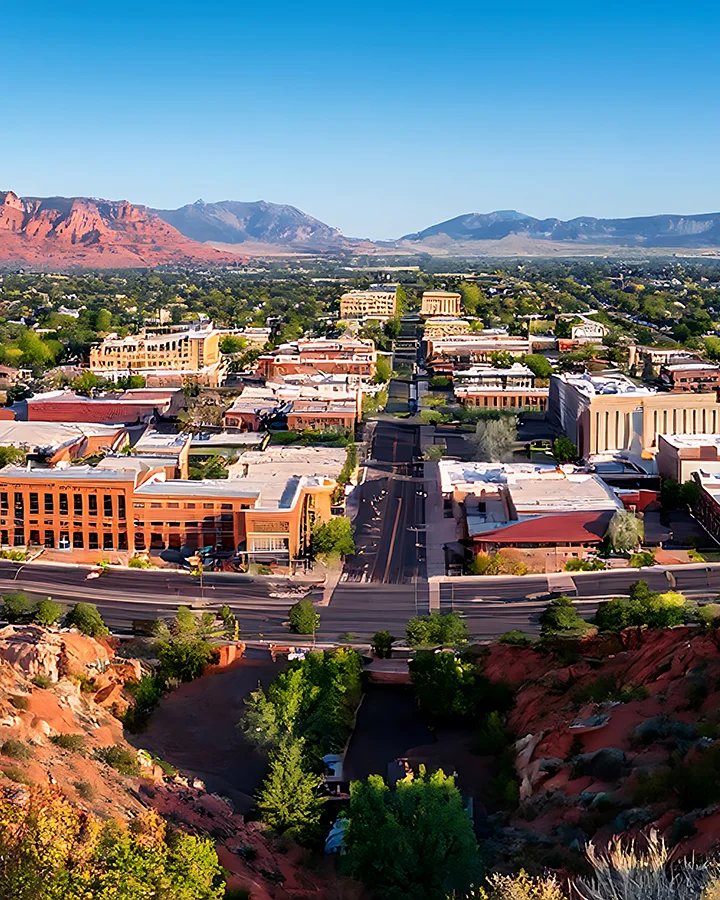
St. George sits in a basin of red rock at the south end of Utah, close enough to Las Vegas for a direct flight anywhere and far enough from it to feel like nothing alike. Snow Canyon is fifteen minutes out. Zion is about an hour.
It is the county seat and the regional centre, so the things that make a place workable are here: a regional hospital with real specialist care, a university, an airport, and enough restaurants and shopping that nobody drives to another county for an evening.
People move here for the winters and stay for the mornings. What they trade for it is July and August, when it runs past a hundred for weeks, and a place that keeps growing around them.
Living here
What is on the other side of the front door.
Red rock on all sides
Snow Canyon State Park, Red Cliffs, and the trails off Red Hills Parkway, all inside a fifteen minute drive.
Healthcare that keeps up
Intermountain St. George Regional Hospital anchors it, with specialist care most cities this size send you elsewhere for.
Golf and pickleball
Courses across the valley and courts in most neighborhoods. The Huntsman World Senior Games bring the rest of the country here every autumn.
A university in town
Utah Tech University and Dixie Technical College, which keeps a college-town layer under the retirement one.
The airport
St. George Regional flies to several western hubs, and Las Vegas is under two hours by car for everything else.
Water is a real subject
Conservation shapes landscaping rules and plant choices here, and it is part of designing a house for the desert.
Why build here with Sagestone
A St. George company, start to finish.
Sagestone works out of an office on St. George Boulevard and belongs to a family business that started in this city. That shows up in how a build here runs.
An office on St. George Boulevard
335 E St. George Blvd, a few minutes from most lots in the city. Meetings and walkthroughs happen in person, and a site visit is a short drive.
A St. George company since the 1930s
JMI started here as a lumber company, and the Jennings family still runs it. The builder on your house belongs to the same community you are moving into.
The city process, handled for you
Sagestone takes your plans through the City of St. George building department and manages every subcontractor, so your part is deciding what goes into the house.
Homes you can walk through first
Most of our Parade of Homes entries are in The Ledges, inside St. George city limits and open to the public each February. See the Parade homes.
See what building on your lot involves.
Bring a parcel number and a budget range. You get a straight read on what the lot supports and what the build takes.
Permits and review
Who has a say in your house.
Every build here goes through the City of St. George. Some also answer to a subdivision's architectural committee, and that second layer catches people out because it comes first.
| Who reviews | What they govern |
|---|---|
| City of St. George | Building permits, inspections, zoning and setbacks. Landscaping follows Article 23 of the city zoning ordinance, which is written around water use. |
| Your subdivision | Communities like Entrada, Stone Cliff, SunRiver and The Ledges run their own architectural committees, with height limits, materials and minimum floor areas that differ by community. Approval there comes before the city application. |
| Nobody, sometimes | Plenty of older streets and unplatted parcels carry no HOA at all, which means the city is the only review and the schedule is shorter. |
Around the city
Where people are building.
St. George is not one market. What a lot costs, what it takes to build on, and who reviews the plans all change by area.
Lots and permits
What it takes to start.
Lot supply is the constraint here. New ground is on the edges of the city, and anything close in usually means buying a house to take down. Both work, and they carry different budgets.
Sagestone can walk a lot with you before you buy and flag what will be expensive to build on, which is the part that is hardest to judge from a listing photo and a plat map.
Questions about St. George
Questions? Let’s start here.
Here are answers to some of the questions we hear most often. If you don’t see yours, give us a call. We’re happy to talk it through.
Is it cheaper to build on a bench lot or downtown?
The house costs about the same. The lot and the site work do not. A bench lot adds grade, rock and retaining. An infill lot adds tree protection, tight access and tying into older utilities. A study of your specific parcel is the only way to know which is cheaper for you.
Do I need HOA approval to build in St. George?
It depends on the subdivision. Communities like Entrada, Stone Cliff, SunRiver and The Ledges run architectural committees, and their approval comes before the city permit application. Plenty of older streets have no HOA at all.
How hot does it get, and does it change the house?
July and August run past a hundred for weeks. It changes real decisions: which way the glass faces, how much shade the west side gets, roof and insulation choices, and where the mechanical equipment sits. Designing around it costs nothing extra if it happens early.
What about water?
Conservation shapes the landscaping ordinance and the plant list, and it belongs in the design from the start, not at the end. The city publishes what is allowed, and your plan gets drawn to it.
Can you help me find a lot?
Yes. Sagestone walks lots with clients before they buy and flags what will be expensive to build on. Do that before an offer, not after.
How long does a build take here?
About ten to twelve months from the date of contract.
Start here
Bring the parcel number. We will tell you what it supports.
You get a read on the site work, the review your subdivision requires, and what building on that lot costs, before you commit to anyone.
Start your build